Shipping Container Buyers Guide Australia
This shipping container buyers guide helps Australian buyers understand container types, conditions, pricing, and delivery before purchase. At L & N Johnson Pty Ltd, we work closely with customers to choose the right container and deliver professional support.
Understanding Different Types of Shipping Containers
20ft Containers suit general storage, tools, and building materials for homes, farms, and small businesses – browse our 20ft shipping containers. 40ft Containers offer more space for bulk stock, machinery, and long-term commercial storage – see our 40ft shipping containers for sale. 10ft Containers suit tight footprints needing a secure, compact space – view our 10ft shipping containers for sale. We also supply High Cube, Side Opening, and Double Door configurations for extra height and easier access.
New One-Trip containers are used for a single shipment and have minimal wear. Used containers are more affordable, so check for rust, dents, floor condition, and door operation. Cargo Worthy containers meet a higher inspection standard suited to transport and shipping use.
Where to Buy Shipping Containers in Australia
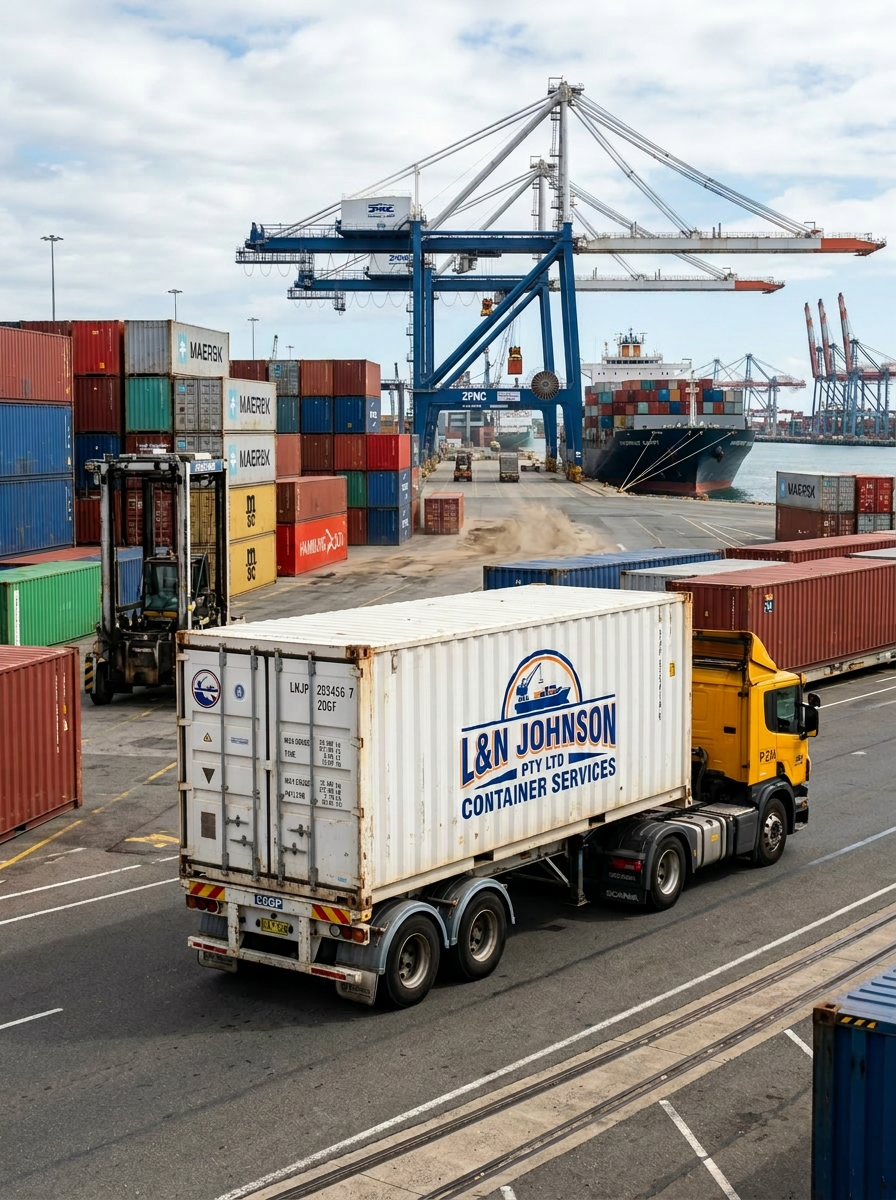
Local dealers offer easier communication and local delivery support, though stock varies by location. Online suppliers make it easy to compare sizes and prices – this shipping container buyers guide advises confirming the supplier’s business details via the Australian Government’s ABN Lookup. Ports and depots often have larger stock, but you may still need help arranging transport and inspection.
Pricing and What Affects Cost
Prices vary by size, condition, location, and delivery distance. Before purchasing, confirm whether GST and delivery are included, and get a clear quote covering size, condition, total cost, payment terms, and lead time. Be wary of very low advertised prices that exclude delivery, GST, or condition details.
Delivery, Inspection and Care
Make sure your site has firm ground and clear truck access – check for low trees, overhead wires, narrow gates, and enough turning space. Local delivery is usually simpler to arrange than rural or remote drop-offs.
On delivery, inspect for rust, dents, leaks, and damaged seals, confirm the doors open, close, and lock properly, and check the unit is wind and watertight. Some surface rust and wear is normal on used containers. Once in place, keep it on firm, level ground and check vents and seals periodically to extend its lifespan.
Many buyers modify containers into site offices, workshops, or storage rooms with windows, roller doors, insulation, or electrical fittings – confirm lead time and whether council approval applies, particularly for long-term, residential, or business use, as rules vary between councils.
Conclusion
Buying a shipping container in Australia is a smart investment when you choose the right size, condition, and delivery option from the start. At L & N Johnson Pty Ltd, we offer clear guidance, accurate quotes, and support throughout the buying process, whether you need a container for storage, farming, construction, business, or modification.